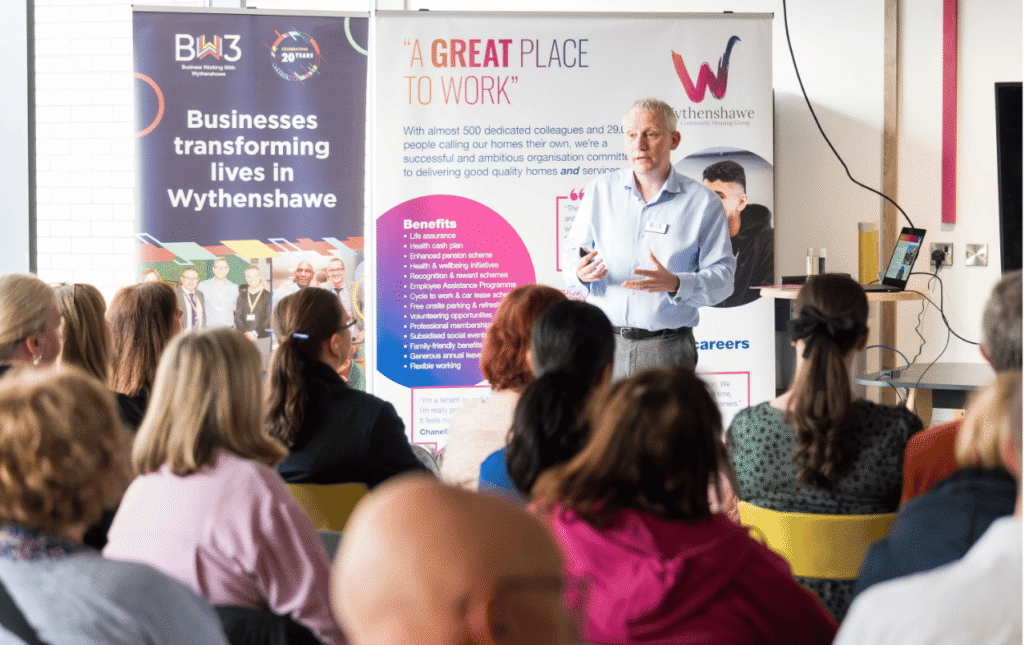
Since Andy Burnham arrived in 10 Downing Street, much has been written about ‘Manchesterism’ and what it could mean for national housing policy. Paul Seymour is in the ideal position to tell us. Stephen Delahunty reports
When we sit down over video call to speak to Paul Seymour, newly appointed chair of Manchester Housing Providers Partnership (MHPP), it is just a few days before Andy Burnham, former mayor of Greater Manchester, will be officially coronated as prime minister.
With another local MP, Angela Rayner, returning as housing secretary and Mr Burnham devolving parts of the Ministry of Housing, Communities and Local Government to the city, the call for the sector to form regional partnerships has never been stronger.
But Mr Seymour is in a new role as well. The executive director of customer and communities at Wythenshawe Community Housing Group (WCHG) is only two weeks into the chair role at MHPP. He has been involved in the partnership since February 2021 and has chaired its homelessness group since September 2024.
But he now takes the helm at a time where Manchester’s record on housing is under the national spotlight.
MHPP brings together housing providers from across Manchester to drive collaboration on priorities including delivering more affordable homes and tackling homelessness, which Mr Burnham has placed central to his administration’s agenda. He pledged £340m to end rough sleeping in his first act as prime minister.
He backed that up last week with the launch of a national drive, alongside a further £102m in funding, to get all people sleeping rough off the streets by Christmas.
But as Mr Burnham takes his ambition nationally, back in Manchester, the work is far from done. “We have to aim high and end homelessness,” Mr Seymour tells Inside Housing. “That has to be the aim, and the partnership has a big role to play in making it a brief experience.”
His aspiration to tackle this issue has been driven not just by his 30-year career in the sector so far, but also by his own lived experience, which “brought me to housing”.
Thriving communities
As a child and young adult, Mr Seymour experienced homelessness himself, and also helped a family member who became street homeless in London more than once before they were assessed and sectioned under the Mental Health Act.
“There are amazing street organisations working in London that helped my family member. And this experience forms part of my drive and passion to make a difference, not just in homelessness, but for our customers and our communities – hearing their voices, listening to what they’re saying, and collaborating with partners to create thriving communities”, he says.
At MHPP, its members were involved in providing homes through the Housing First model, which provides immediate housing and open-ended support to people sleeping rough, and many in the sector believe it should be at the centre of a new “prevention-based” system.
In the first speech of his leadership campaign, Mr Burnham made clear his intention to “adopt a national Housing First philosophy”.
On prevention, Mr Seymour explains that members have adopted a “spend to save approach” to tackling homelessness in opposition “to spending money in a reactive way”. This includes working with care leavers to support them moving into their first homes.
The partnership’s members are also working closely with the city council, which is currently reviewing its homelessness strategy to end B&B use and make homes available for temporary accommodation. However, “the key objective is to try and reduce the need for temporary accommodation”, he adds.
A key new area where the new chair thinks MHPP could make a difference is through the government’s flagship £5bn, 10-year Pride in Place Programme. It aims to give power to local people and partnerships, bringing together residents backed by neighbourhood boards, the local MP, the council, businesses and community organisations to decide how they would like to spend the cash in their area.
The funding is being directed at places where indices of deprivation haven’t improved – and with MHPP’s members owning a lot of homes in those areas, the programme offers the chance to create “a community-led multiplier effect” in delivering those ambitions.
“There are barriers both to building these homes and to making them affordable for the households who need them”
For Mr Seymour, there is no trade-off between new and existing stock spending. He says the priority should always be to “look after our existing residents and communities”, alongside creating business plans that allow the capacity to build new homes. “This is where the 10-year rent settlement and Homes England funding comes in,” he adds.
The new chair believes tweaks to the settlement are needed to help encourage the delivery of three and four-bedroom homes.
“The challenge with building more four-bedroom and larger homes is that the current rent model does not generate enough rental income to support the level of borrowing required to build them,” he explains.
This model is also used in development appraisals, so as larger homes often require a greater level of internal subsidy to make them financially viable, fewer of them are built.
He adds: “This is particularly challenging in Manchester, where there are long waiting lists for homes with four or more bedrooms. Many of the households in need of these larger homes also require fully accessible properties, which can add further to the cost of construction.

At the same time, Mr Seymour echoes the claim made by many in the sector, who have called for an increase in Local Housing Allowance rates, and the temporary accommodation subsidy.
“This means there are barriers both to building these homes and to making them affordable for the households who need them,” he says.
“Larger homes are more difficult for housing providers to fund and build, while the benefit cap can make it harder for households to afford the rent once those homes are provided. Both the rent model and the impact of the benefit cap on larger households would therefore benefit from review.”
The temporary accommodation subsidy is “another big one”, he says. “That hasn’t changed since 2011, which is a real problem for Manchester and all the other authorities.”
MHPP’s members have been making homes available for use of temporary accommodation that they manage directly or through the council, but ultimately the goal was to reduce the need for this housing and Mr Seymour is looking forward to the council’s review of its homelessness and rough sleeping strategy for additional opportunities to support this work.
Build on success
On Mr Burnham’s wider plans to get councils building more again, Mr Seymour believes this is “positive” and shouldn’t be seen as “competition for registered providers”. Manchester saw 4,766 homes built in 2025-26.
Mr Burnham’s successor, Greater Manchester mayor Bev Craig, appealed to public sector bodies this month to “offer up” derelict land so tens of thousands of council houses can be built. The new mayor is aiming to build 10,000 “genuinely affordable” homes in the city region by May 2028, part of a longer-term plan to create 50,000 social and council homes.
“If Manchester and other local authorities can actually build more homes alongside us building more homes, that’s a win-win for our residents, communities and people waiting for rehousing”
Mr Seymour says: “The more homes that we can provide together, the better. Obviously they [the council] have got sites that they own that they could develop. They also are really favourable about bringing sites to market or bringing sites to the registered providers in the partnership to develop on, so it’s a partnership approach really.
“If Manchester and other local authorities can actually build more homes alongside us building more homes, that’s a win-win for our residents, communities and people waiting for rehousing.”
His approach to achieving these aims is going to require a leadership style that involves “engaging and listening to partners” because “collaboration is the only way that partnership works”.
By the end of his chairmanship, Mr Seymour wants to be able to look back and say that MHPP not only delivered more homes, but also the right types of homes in the right places.
“I want to help our residents reach their goals and feel safe in their communities. If I’m chair in 10 years and Pride in Place is finished, I want to look back and say that wasn’t a short-term investment. It’s been sustainable, and it’s delivered real outcomes and results.
“It’s a high benchmark, and it’s ambitious, but it’s one I’m passionate about.”